

The rapid advancement of artificial intelligence (AI) has sparked widespread concerns about the potential for AI to replace human jobs. This article aims to address these fears by highlighting why AI is more likely to complement rather than replace human labour, using insights from Microsoft’s report, “Will AI Fix Work?“.
The Fear of AI
The idea that AI will render human workers obsolete is not new. Historically, technological innovations such as the Industrial Revolution and the advent of computers triggered similar fears. However, these innovations ultimately led to the creation of new job categories and enhanced productivity.
Understanding AI’s Role
AI is designed to enhance productivity by performing repetitive and data-intensive tasks. Instead of acting as an autonomous replacement, AI serves as a “copilot,” assisting workers in their daily tasks and enabling them to focus on more complex and creative endeavours.
Microsoft’s Perspective
According to Microsoft’s report, AI’s primary role is to alleviate “digital debt”—the overwhelming amount of data and digital tasks burdening employees. By automating mundane tasks, AI allows workers to engage in higher-value activities. Microsoft envisions a future where AI and humans form a dynamic partnership, boosting overall productivity and job satisfaction.
- Alleviating Digital Debt
AI can help manage the overwhelming influx of data, emails, and notifications that burden employees. This digital debt reduces productivity and stifles creativity. By automating routine tasks, AI can free up time for workers to focus on more strategic and innovative activities. This shift allows employees to engage in higher-value tasks that require human creativity and critical thinking.
- Creating an AI-Employee Alliance
The data from Microsoft’s survey indicates that employees are more eager to leverage AI to reduce their workloads than they are afraid of job loss. A majority of respondents expressed a willingness to delegate administrative, analytical, and even creative tasks to AI. This indicates a growing acceptance of AI as a tool to enhance productivity and alleviate burnout.
- Enhancing Productivity and Wellbeing
Business leaders see AI as a mean to increase productivity rather than cut jobs. The priority is to use AI to assist with repetitive tasks, improve employee wellbeing, and enhance overall work efficiency. AI’s ability to handle mundane tasks can significantly reduce the cognitive load on employees, allowing them to concentrate on more meaningful work.
- Promoting New Skills and Collaboration
As AI becomes an integral part of the workplace, employees will need to develop new skills to work alongside these technologies effectively. Critical thinking, complex problem-solving, and creativity will become essential competencies. Organisations will need to invest in training and development to ensure their workforce is equipped to collaborate with AI.
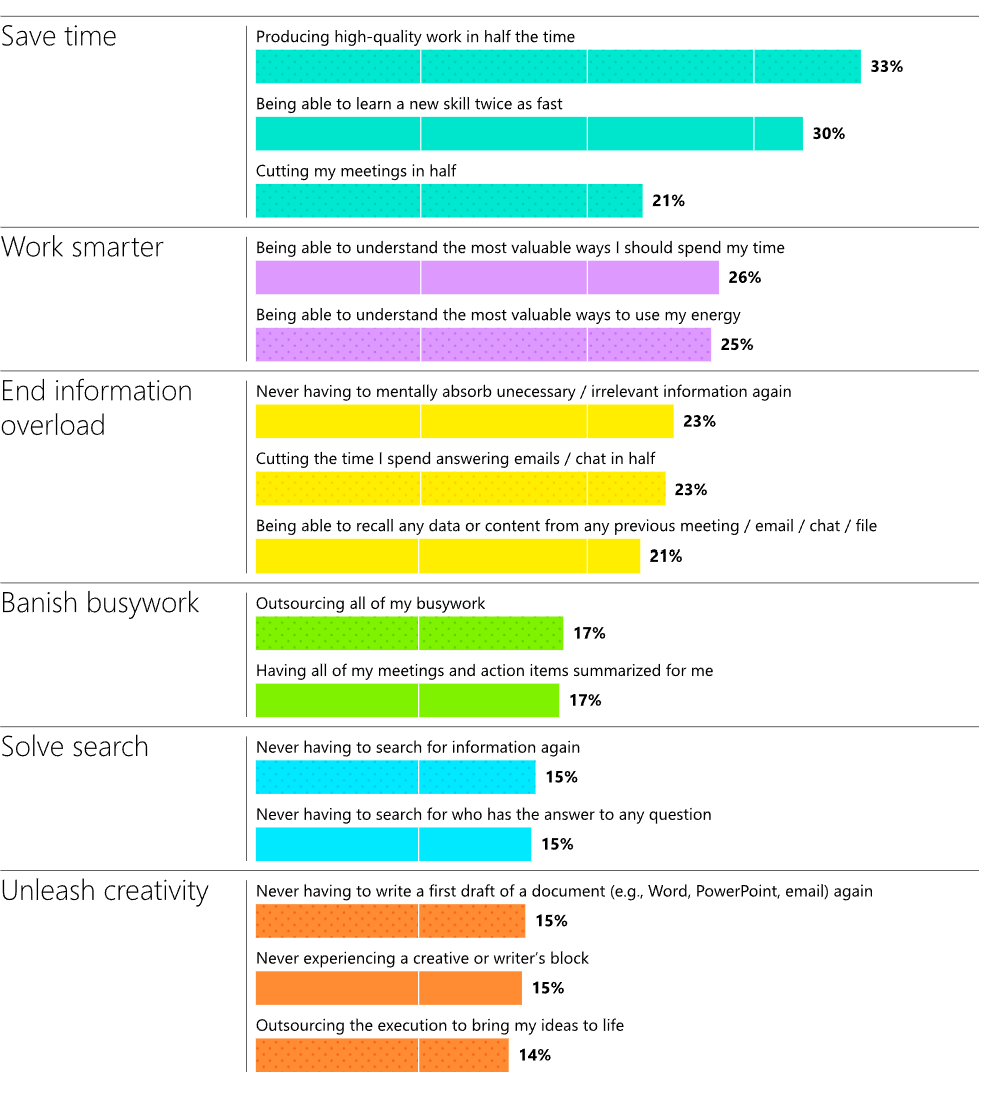
Asked to imagine work in 2030, people Microsoft surveyed say they’d most value changes that saved them time—like producing high-quality work and learning new skills faster.
 Source: Microsoft Work Trend Index
AI Enhancing Human Capabilities
AI is already being integrated into various industries to support human tasks. For instance, in customer service, AI chatbots handle routine inquiries, freeing up human agents to tackle more complex issues. In healthcare, AI assists in diagnosing conditions, allowing doctors to focus on patient care. These examples illustrate how AI can free up time for more strategic work, enhancing human capabilities rather than replacing them.
The Reality of AI Integration
The integration of AI into the workplace is largely positive. Microsoft’s report indicates that both employees and leaders see AI as a tool that can significantly enhance productivity. Rather than fearing job loss, many workers are embracing AI for its potential to improve their work experience.
Future Workplaces with AI
Looking ahead to 2030, AI is expected to continue shaping the future of work. The key will be finding the right balance between AI-driven efficiency and human creativity. Workers who adapt and develop their AI aptitude will thrive in this new environment, leveraging AI to achieve unprecedented levels of productivity.
Conclusion
AI is not here to replace workers but to augment their capabilities. By automating routine tasks, AI allows humans to focus on more meaningful and creative work. Embracing AI as a partner in professional growth will be crucial for future success.
For a more detailed analysis, you can read the full report from Microsoft’s Work Trend Index here.
FAQs
Will AI take over all jobs? No, AI is designed to handle specific tasks, freeing humans for more complex and creative work.
How can I prepare for an AI-driven workplace? Focus on developing skills that complement AI, such as critical thinking, creativity, and emotional intelligence.
What skills will be valuable in an AI-integrated work environment? Skills in AI literacy, adaptability, and continuous learning will be highly valuable as AI technology evolves.
Contact Us Today
We can help you understand the potential benefits of AI for your business and how it can be tailored to meet your specific needs and goals.